The Atlas Stones
Spherical, smooth, and cast to a fixed weight — the Atlas Stone is a designed object that borrows deliberately from the oldest tradition in the sport.

The shape that defeats you
Five concrete spheres, graduated in weight, set on pedestals of ascending height: this is the Atlas Stones event as it appears in World's Strongest Man competition, first staged in 1977 in California. The stones are cast in moulds, typically from a mix of concrete with aggregate, and the finished surface offers almost nothing to hold. That is the point. A round object with no handle forces the lifter to compress it against the body — a technique that echoes what Basque harrijasotzaileak have done with natural spherical stones for generations, and what the Húsafell Stone demands when a lifter wraps their arms around its flat mass and walks.
The event weights used in World's Strongest Man have varied across decades, with the final stone — the one placed on the tallest pedestal — reaching around 160 kilograms in some editions. The weights are fixed per competition but differ year to year, so no single global standard exists for the Atlas Stones in the way that, say, a powerlifting total is governed. Each set is purpose-cast for the contest.
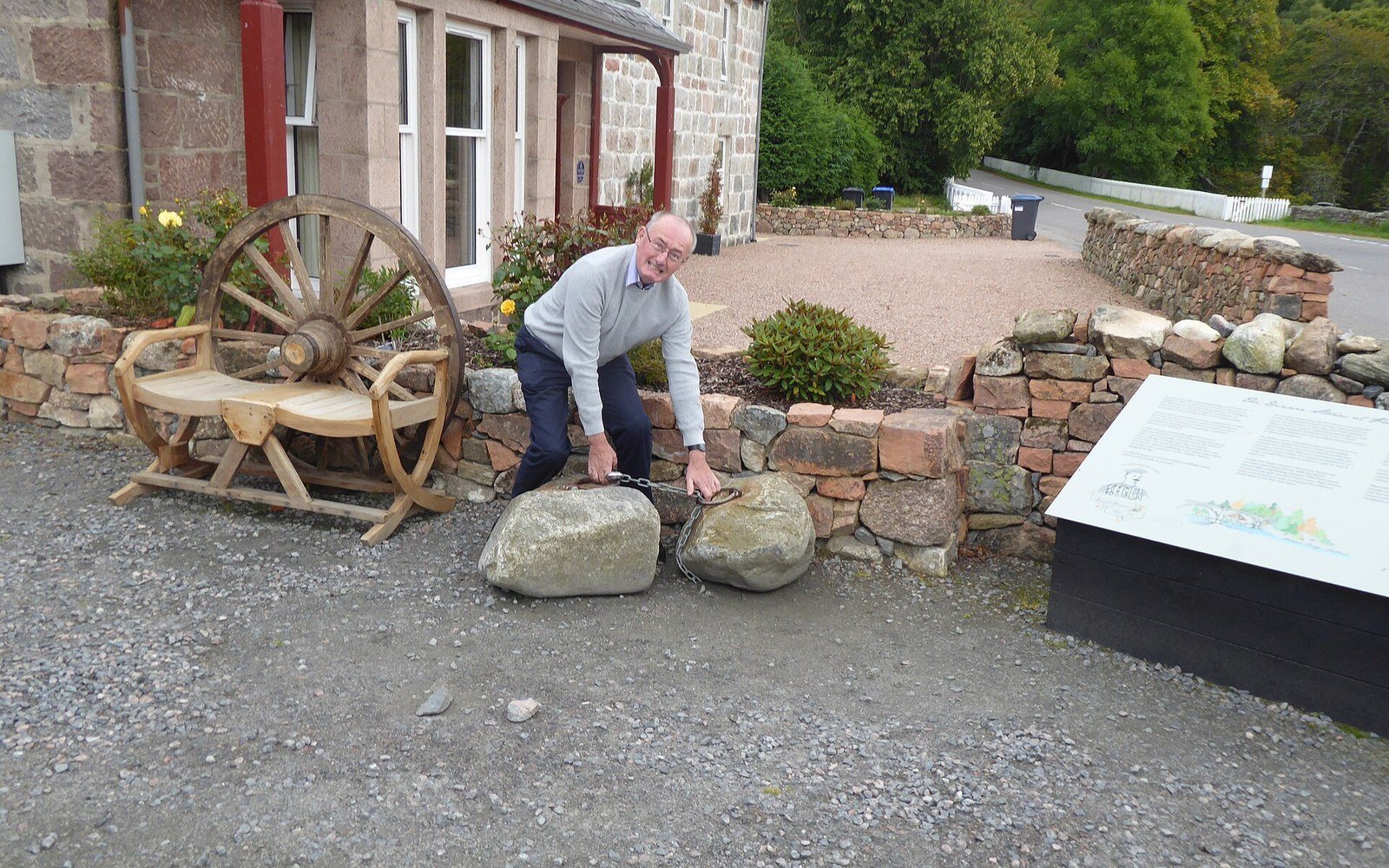
The concrete formula matters. Too dense and the surface becomes unworkably slick; too porous and the stone chips under competition loads. Manufacturers working in the strongman equipment era developed mixes aimed at a specific surface friction, arriving at objects that are simultaneously standardised and still authentically brutal. Tacky compounds applied to forearms before a lift — legal in competition — acknowledge that the material alone remains genuinely difficult.
The name has no deep etymology: it refers to the mythological figure holding up the world, and the marketing logic is obvious. What stayed, however, is the shape itself — not borrowed from mythology but from the hillside. Every cast Atlas Stone is a replica of something that already existed in Basque plazas and Icelandic farmyards long before anyone poured concrete into a mould.