The Inver Stone
A rounded granite lump on Deeside — awkward precisely because there is nothing to hold.
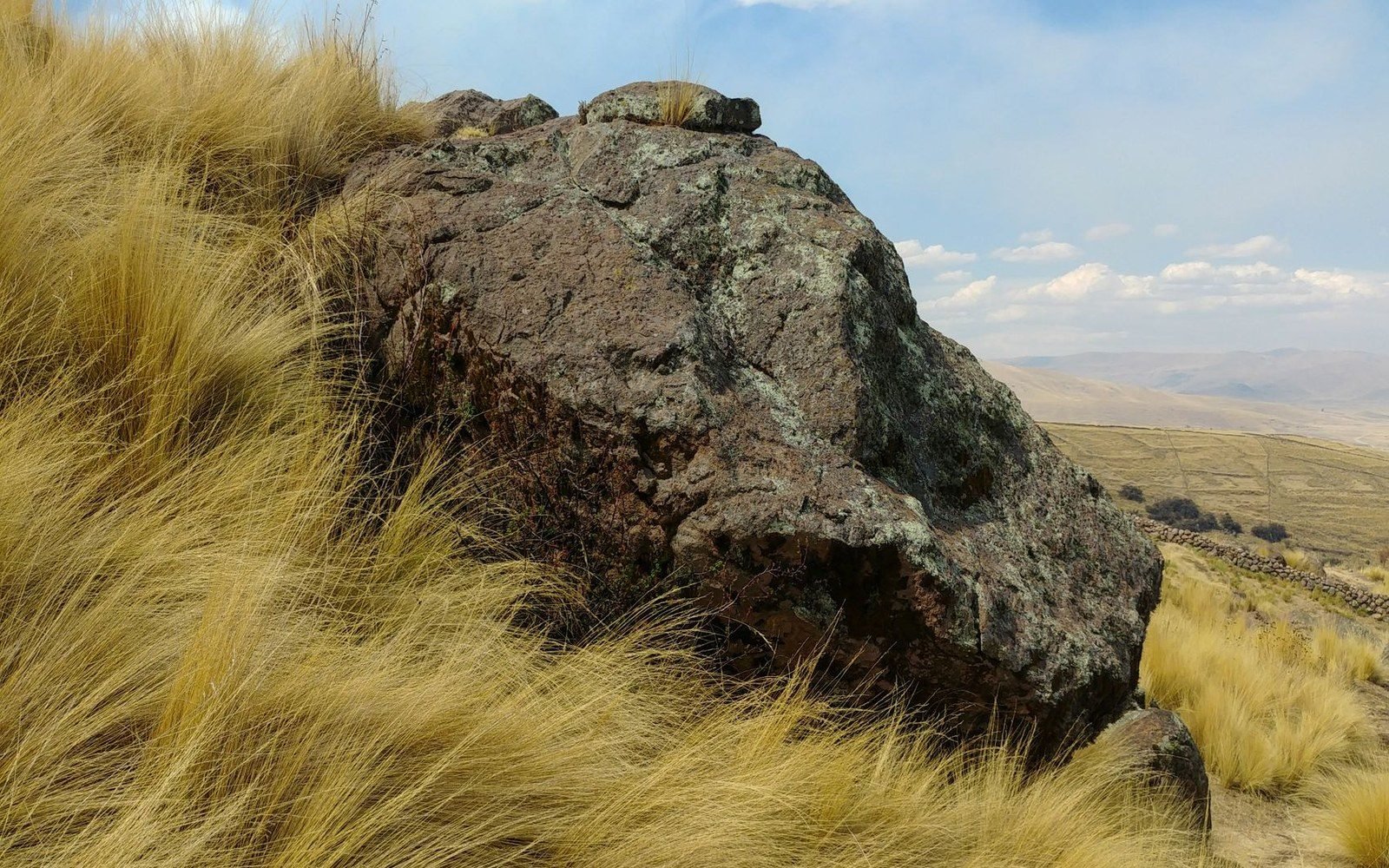
The Stone at Inver
The village of Inver sits on the south bank of the Dee in Aberdeenshire, a short distance from Braemar, where the Highland Games have drawn crowds since the nineteenth century. The stone that carries the village's name is a rounded granite boulder — no ring, no recess, no natural ledge a hand can claim. That absence is the whole point.
Dimensions and figures
| Approximate weight: ~102 kg (circulated figure, not formally certified) | |
| Location: Inver, Deeside, Aberdeenshire | south bank of the River Dee |
|---|---|
| Character: rounded granite, no handle, ring or recess | |
Granite in this part of Deeside tends to form without convenient edges, and the Inver Stone is a clear example of what that produces: a mass of rock that a lifter must embrace rather than grasp. Where the Dinnie Stones at Potarch have iron rings sunk into them — handles, essentially, however brutal — the Inver Stone offers nothing but its own curved surface. Friction and compression are the only tools available.
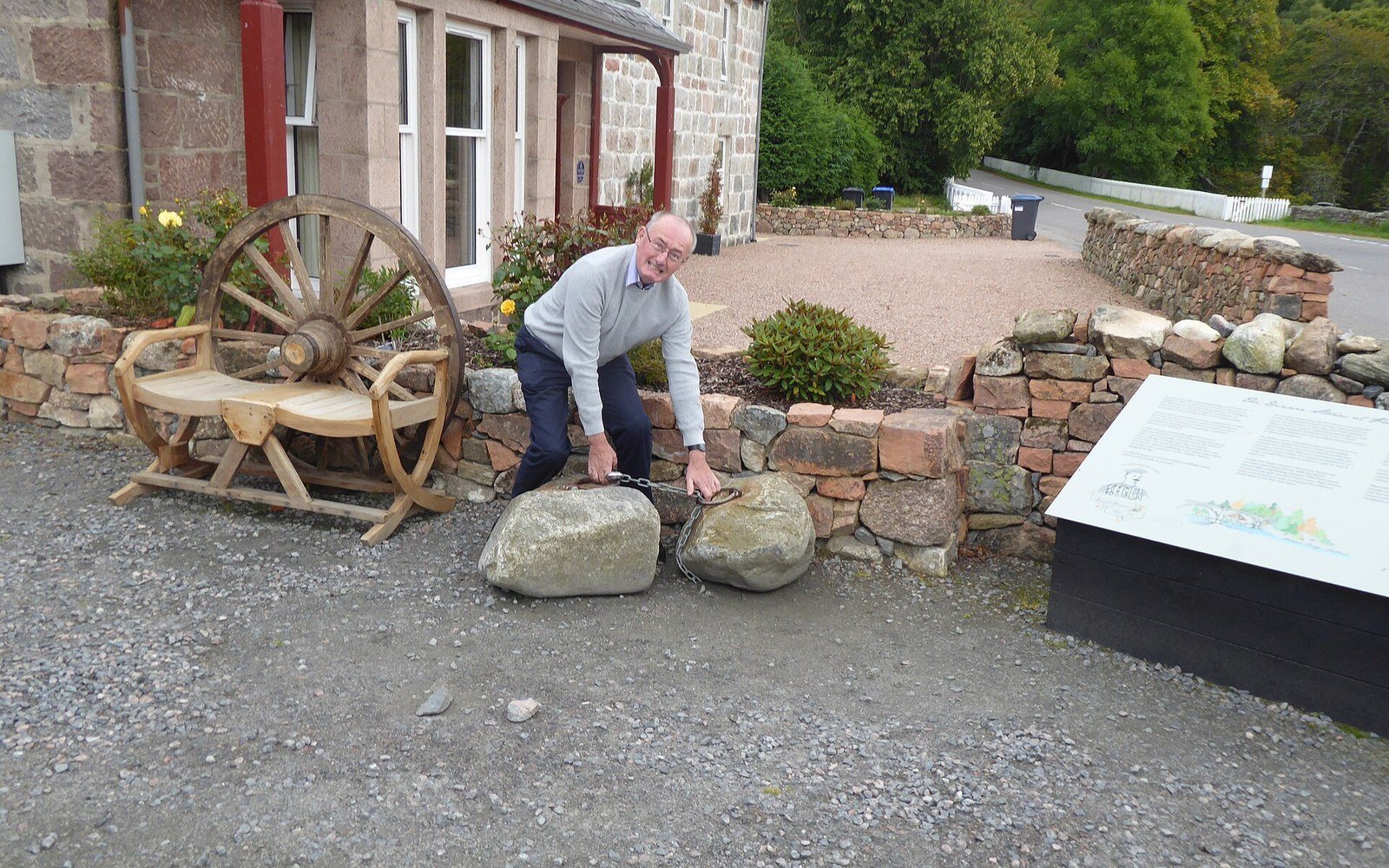
The stone's weight is recorded at around 102 kilograms, though the figure has circulated in slightly varying versions and should be taken as approximate rather than precisely certified. What is not in question is the shape: roughly spherical, which means that any contact point the lifter finds shifts the moment the stone moves. A rectangular block can be muscled; a smooth round one must be controlled throughout.
Donald Dinnie, who performed feats of lifting and carrying across the north-east of Scotland in the second half of the nineteenth century, is associated with the Inver Stone as he is with nearly every notable boulder of the region. That association is worth treating as traditional rather than rigorously documented in every case — Dinnie was genuinely extraordinary and genuinely active across this landscape, but the record-keeping of rural stone contests was rarely systematic. His name and the stone are linked in local memory; whether all the attributed lifts happened exactly as described is harder to confirm.
What the stone does confirm, simply by existing, is the older logic of stone challenges: the object's difficulty is its shape, not just its weight. A round stone with no handle requires a different negotiation than a block of equivalent mass, and no amount of standardisation changes that. The Inver Stone was not cast in a mould to a target specification. It is simply the stone that was there, on the bank of a river, in a part of Scotland where carrying heavy things was both practical work and, eventually, a measure of a man.
It remains in the village, a piece of local geology that became local history by being inconveniently heavy and perfectly smooth.