The Highland Games
Caber, hammer, and weight over bar: events where brute force is only part of the answer.
The Field as a Test of Form
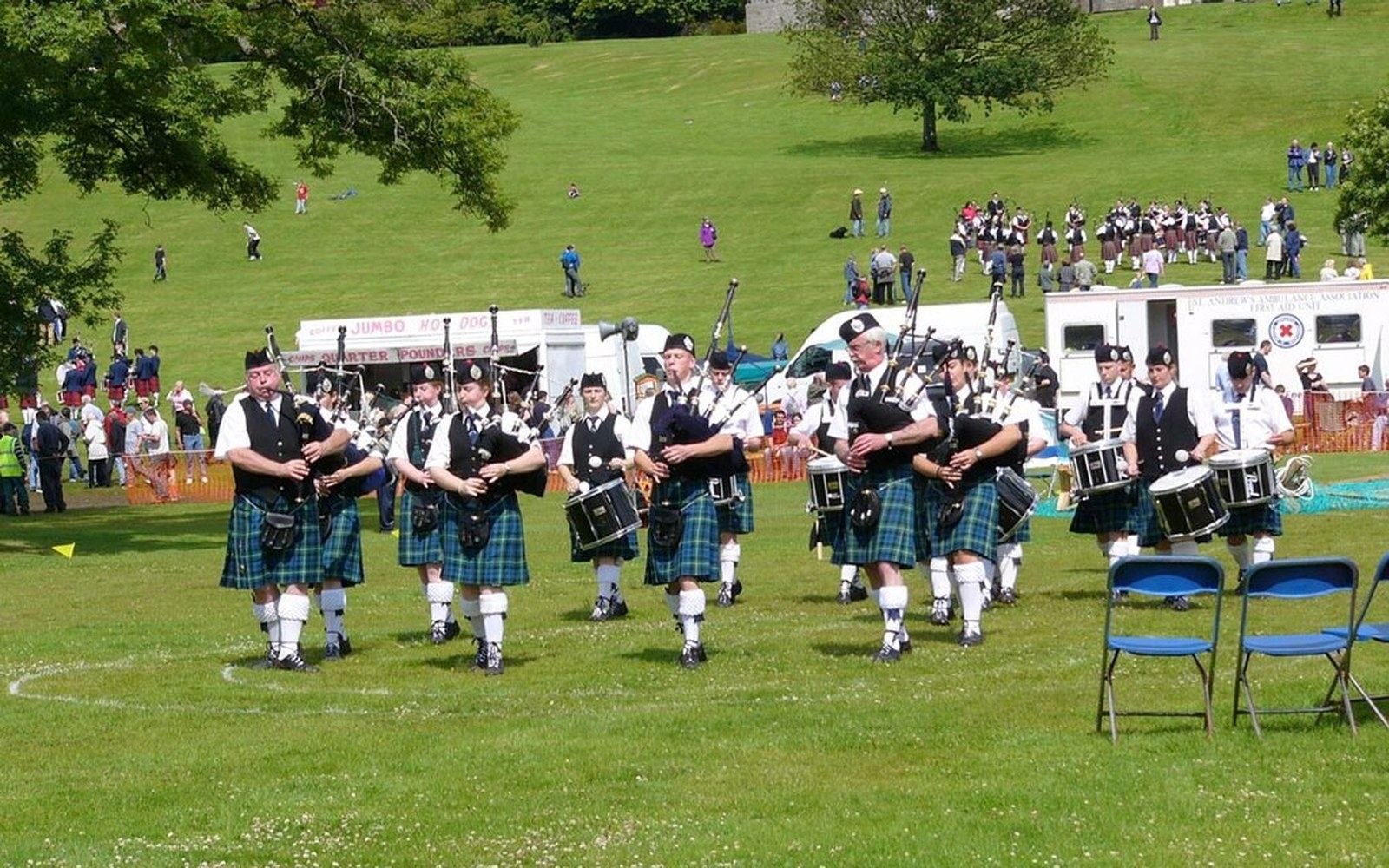
The Highland Games are not a single thing. Dozens of gatherings take place across Scotland every summer, from Braemar — the most famous, attended by the royal family since Queen Victoria's time — to small village fields with a few hundred spectators and a picked-up collection of implements. What holds them together is a shared set of heavy events whose logic is unlike almost anything else in competitive athletics.
What is being judged
| Caber | direction and rotation (twelve o'clock = perfect), not distance |
|---|---|
| Scottish hammer | distance from a fixed position, no glove or wire |
| Weight over bar | height cleared one-handed, in rising-bar competition format |
The caber is the obvious example. A tapered pine log, typically somewhere between five and six metres long and weighing upward of sixty kilograms depending on the particular gathering, is not thrown for distance. The athlete cradles it vertically, the heavy end uppermost, runs forward, and heaves it end-over-end. The scoring measures direction and rotation: a perfect toss lands dead ahead and finishes in the twelve o'clock position, the butt pointing straight back at the thrower. Distance is irrelevant. A caber that travels thirty metres but falls at ten o'clock loses to one that barely clears the ground and lands at eleven. This makes the caber genuinely unusual as a heavy event — control is the entire point.
The Scottish hammer has a more straightforward ambition: distance. A metal ball fixed to a wooden or cane handle, standardised at roughly seven and a half kilograms for men in most competitions, is swung in a wide arc overhead and released. Unlike the hammer of Olympic athletics, there is no wire and no glove; the athlete plants a metal blade at the toes, swings from a fixed position, and the implement goes wherever the arc sends it. The technique is rotational but grounded, and the implement's arc keeps it close to the athlete's body until the moment of release — which is why grip endurance, and the specific wear on the hands, distinguishes experienced hammer men from newcomers.
Weight over bar is the event that most clearly divides Highland Games sensibility from anything found in a standard athletics programme. A weight — traditionally a metal ball on a chain, either roughly thirteen or twenty-five kilograms (28 or 56 lb) depending on the class — is thrown one-handed over a horizontal bar. The bar rises after each round, in the style of a high-jump competition. What the crowd sees is something between a kettlebell swing and a one-armed snatch, explosive and brief, and the successful athlete disappears behind the bar rather than watching where the implement lands. The weight must clear cleanly; judges watch for contact with the bar. Records here tend to be highly specific to the gathering, because bar heights and weight classes are not universally standardised across every organisation — something the Scottish Highland Games Association has worked to bring into alignment over the years, but local variation persists.
What Standardisation Leaves Untouched
The question of what is actually being measured matters more in the Highland Games than it might first appear. The hammer and the weight over bar reward power and technique; the caber rewards something harder to name — an athlete who can judge a run-up, feel the balance of a log that shifts with every step, and release at precisely the right moment. Different cabers behave differently. Some gatherings have more than one, and a caber that defeats the field in the morning might be replaced with a lighter one in the afternoon. No two gatherings use exactly the same caber, which means a record in the caber toss is always contextual, attached to a specific log on a specific day rather than a universal number.
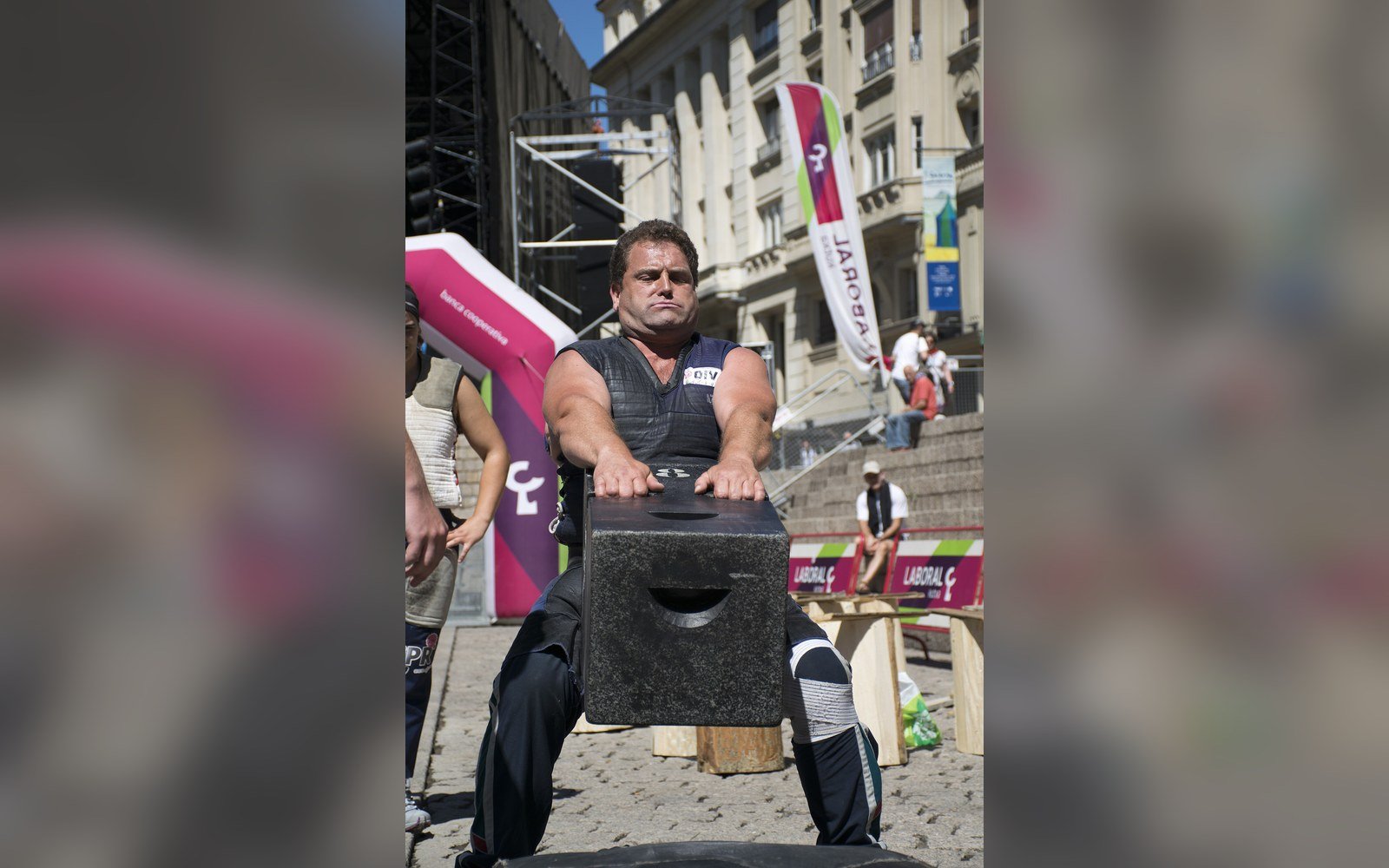
Donald Dinnie, the nineteenth-century Deeside athlete who became the defining figure of Highland Games competition in the Victorian era, competed across all these events for decades, travelling from Braemar to venues across Britain and beyond. His name remains attached to the Dinnie Stones at Potarch — two granite blocks with iron rings — but it was his dominance across the full range of games events, caber included, that made him the measure of the era. The stones are the object that survived; the games are the context that produced the man who lifted them.