The Adjustable Barbell
Plate-loading turned strength into a number that could be repeated anywhere, and York, Pennsylvania became the address for it.
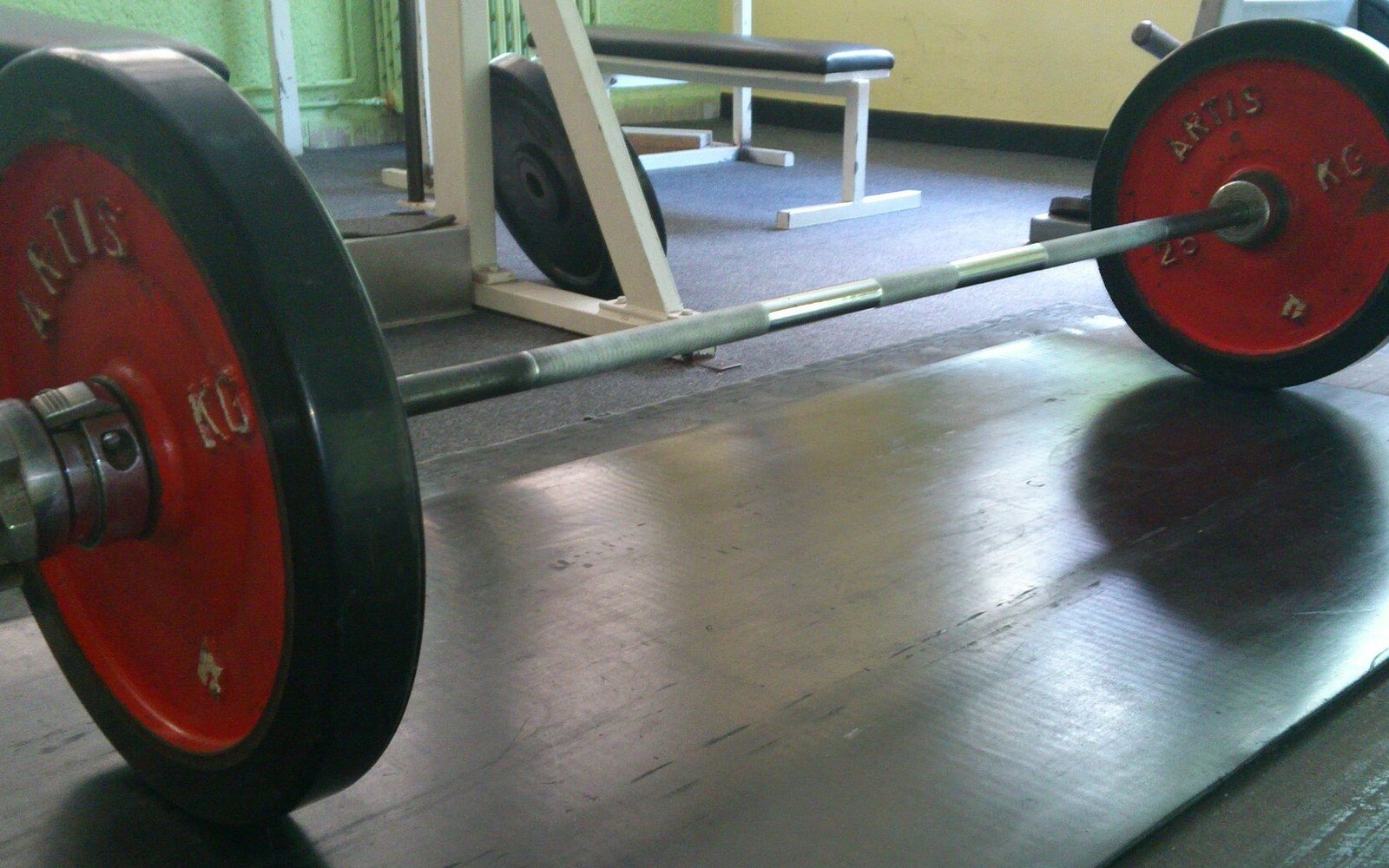
How a sliding scale changed the measure of strength
Before the plate-loaded bar, strength was measured in objects. A stone that resisted you. A man you could or could not lift. An anvil carried across a yard. The number attached to any of these feats was approximate at best, and the feat itself belonged to a place — you had to go there, handle that thing, feel its particular awkwardness. The adjustable barbell dissolved all of that into arithmetic.
The mechanics were simple enough: a steel bar, collars to hold weight in place, and cast-iron plates that could be added or removed in known increments. What that simplicity produced was something more consequential — a universal unit. Two lifters in different cities, or different countries, could load the same weight and compare their results without ever being in the same room. Strength became a number that travelled.
Materials and form
| Bar shaft | typically steel, with knurling for grip |
|---|---|
| Rotating sleeve | spins independently to reduce wrist torque; key innovation for Olympic lifting |
| Collars | lock plates in position; spring, screw or competition-grade clamp types |
| Cast-iron plate | York's de facto standard; rough-finished, slightly variable in early production |
| Bumper plate | rubber or urethane, built to be dropped from overhead; a weightlifting-specific development |
The bar takes a fixed address
York, Pennsylvania became the centre of gravity for this idea in the mid-twentieth century. Bob Hoffman, who had built York Barbell into the dominant American strength equipment manufacturer by the 1940s, understood that standardisation and commerce reinforced each other: if your plates were the plates everyone used, your weights were the weights that records were set with. York Barbell's cast-iron plate became a kind of de facto standard in American strength sport, and the company's catalogue shaped what lifters on several continents thought a barbell should look like and weigh.
The Olympic barbell that emerged from this period had its own engineering logic. A 20-kilogram men's bar (or its approximate equivalent in pounds) with a rotating sleeve — the sleeve spins independently of the shaft, reducing the torque transmitted to the lifter's wrists — became the instrument on which competitive weightlifting and, later, powerlifting were conducted. The International Weightlifting Federation eventually formalised specifications for competition bars: diameter, knurling pattern, tensile strength, sleeve rotation. A bar that met those specifications in one country met them in another. The record became portable.
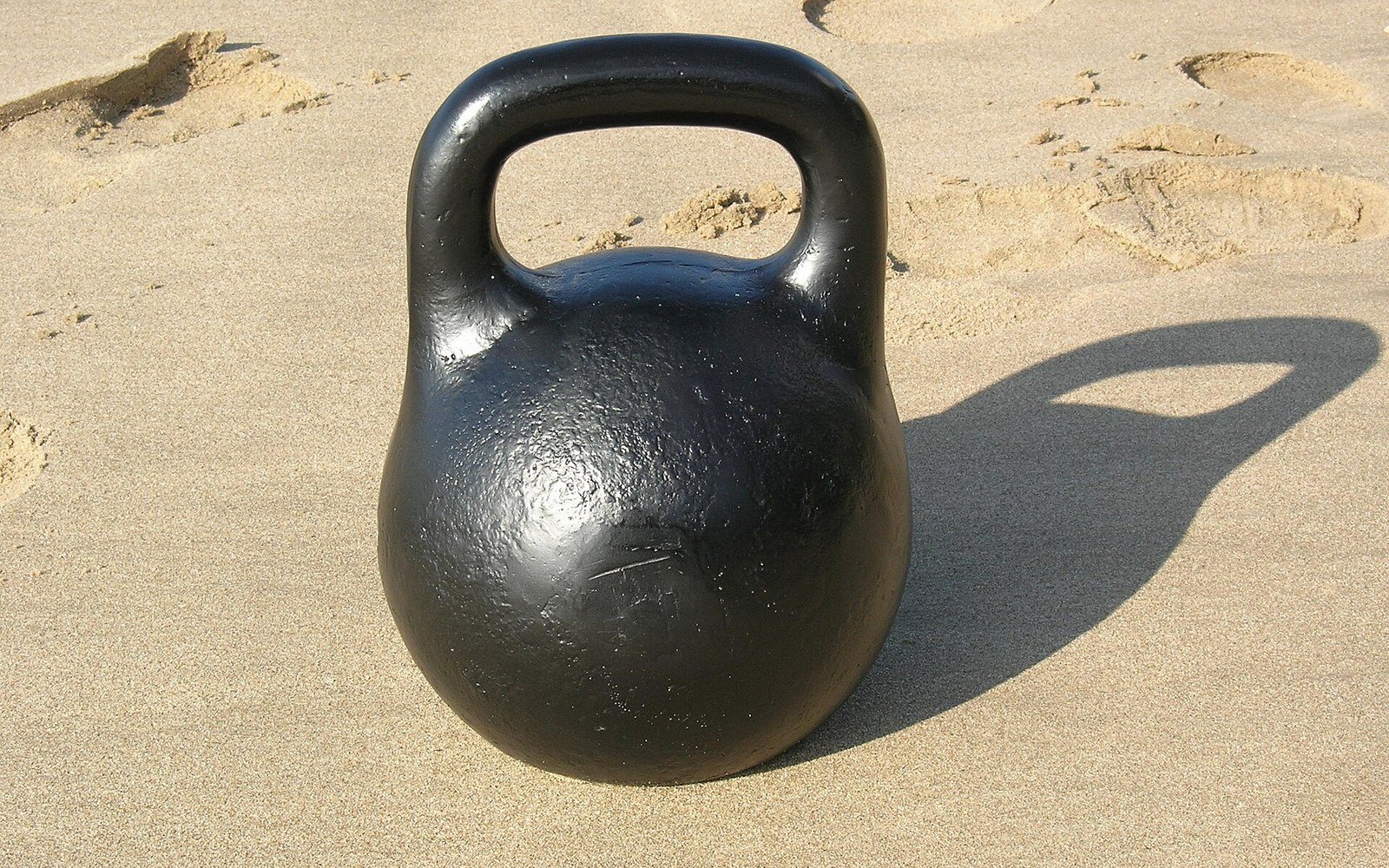
What the adjustable barbell could not do was carry the texture of place. The Húsafell Stone, roughly 186 kilograms of Icelandic basalt, resists you differently at different points in the carry because its mass is not symmetrically distributed and there is nowhere comfortable to hold it. The Dinnie Stones hang from iron rings set into granite, and the angle of pull changes as you straighten. A barbell loaded to 186 kilograms is 186 kilograms from the first millimetre off the floor to the last, and every plate-loaded bar in the world set to that weight behaves the same way. That is the point. It is also the loss.
What standardisation made possible
Standardisation created the conditions for the equipment era in strength sport. Once weight was uniform and bars behaved predictably, records became genuinely comparable — not just within a competition but across time. A squat done in 1972 could be weighed against one done in 2003 because the instrument was the same. The stone traditions had no such continuity; the Inver Stone on Deeside is where it always was, and the conditions of a lift there can never be exactly replicated anywhere else.
The adjustable bar also made training cumulative in a way that stone work could not. Adding a known increment to a known total produced a known new challenge. Progress could be plotted. That calculability was what made plate-loading so transformative — not the equipment itself but the epistemology it introduced, the idea that strength could be tracked like a bank balance.

The plates themselves became objects with their own material culture. York's original cast-iron discs, rough-finished and slightly variable in true weight, gave way to machined steel, then to rubber-coated bumper plates designed to be dropped from overhead without damaging a platform. Each generation of plate reflects the competitive context that produced it: the bumper plate is a weightlifting plate, built for a sport where the bar ends its journey on the floor from shoulder height, not eased down by hand.
The barbell changed what strength meant to ask — and what it meant to answer. The stone traditions had always known that weight alone was not the whole question. The adjustable barbell said, for competitive purposes, that it was. Both positions contain a truth.