Potarch
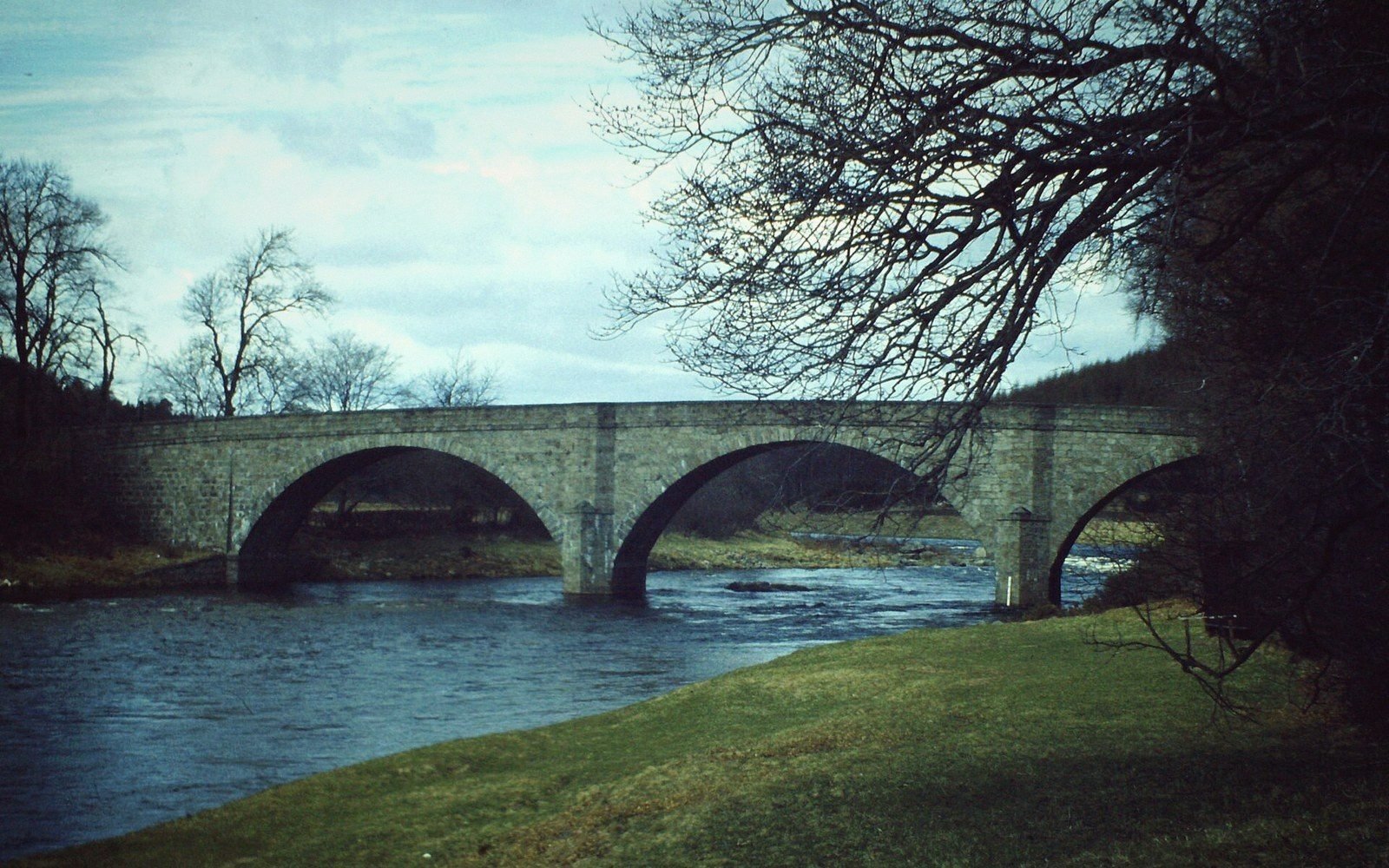
A bridge over the River Dee, an inn beside it, and two stones that have defined the spot for longer than the records go back.
The Place
Potarch sits on the River Dee in Aberdeenshire, roughly halfway between Banchory and Aboyne, where a stone bridge built in 1811 replaced whatever crossing had served the valley before it. The inn that stands nearby has always caught the trade of people moving through that stretch of Deeside — drovers, travellers, later tourists — and for as long as anyone can trace it, the stones were simply there too, part of the furniture of the place.
They are not spectacular objects. Two granite blocks fitted with iron rings, sitting outside without ceremony, worn smooth by generations of handling. No plaque with a founding date, no documentation of when they first became a test. They exist in the category of things that have always been true of a particular spot, and the honest answer to "how long have they been here?" is that nobody actually knows. That uncertainty is part of what makes them interesting.
The Stones and the Name
The Potarch Stones are sometimes called the Dinnie Stones — which is where confusion tends to start. Donald Dinnie, the nineteenth-century Deeside strongman who became the most famous figure in Scottish athletic history, was born at Balnacraig, not far from here, and his association with Aberdeenshire stone-lifting is real and documented. The two granite blocks at Potarch, fitted with iron rings, are the ones named for him. Dinnie is reported to have carried both of them — combined weight around 332 kilograms — across the width of the bridge, rings gripped one in each hand, though the exact date and precise witness record for that feat sit in the zone between documented history and well-circulated tradition.
The stones have remained at Potarch. They did not travel to exhibitions or collections. They stayed at the inn, as local tests of strength tend to do, and people have gone on attempting them — some successfully, most not — without any central body keeping the records. The Scottish Highland Games Association governs competition elsewhere on the calendar, but these stones belong to no formal circuit. They are simply there.
What the Bridge Adds
There is something deliberate about a bridge as the measure. Dinnie's carry was not a lap of a pen, not a lift to a platform: it was a traverse, from one side to the other, with the stones held clear of the ground and the bridge's own width as the fixed distance. The bridge at Potarch is not long — the Dee here is not a wide river — but 332 kilograms of granite, suspended from rings by bare hands, across any distance, makes the span feel adequate.
That specificity of place matters. Unlike the Atlas Stones, cast in moulds to identical specifications and deployed at competitions worldwide, the Potarch stones cannot be replicated. Their weight, their shape, the particular grip the rings allow — these are properties of these objects, at this location, beside this river. A successful carry somewhere else, with similar stones of similar weight, would be a different thing entirely. The authenticity is geographical.
Still There
The inn at Potarch still stands. The bridge still carries the road. The stones are still outside, still available to anyone who arrives and wants to try, still carrying the accumulated history of every attempt since the carrying began — which is to say, since before the records started.
That persistence without institutional support is itself a kind of document. Nobody sponsors the Potarch stones or manages access to them. They endure because the place endures, and because each generation that encounters them finds the proposition self-evident: here are two large stones with rings, and the question they pose has not changed.